![logo[26]](https://cruisnnomads.com/wp-content/uploads/2026/02/logo26-120x79.png)
![logo[26]](https://cruisnnomads.com/wp-content/uploads/2026/02/logo26-300x198.png "logo[26]")
Overlanding Rwanda: From Thunderstorms at the Border to Swimming in Lake Kivu
Our overlanding Rwanda route runs from the Tanzanian border to the Ugandan border, via Kigali, Nyungwe National Park, and Lake Kivu. It’s a journey full of harrowing history, green hills, and warm encounters.
Our overland journey through Rwanda began at the Tanzanian border. Luckily, the whole border crossing is housed in a single building. We’re barely inside for five minutes when a fierce thunderstorm breaks loose. Suddenly it’s pitch dark outside and sand is blowing in every direction. We wait for the Tanzanian immigration officer to take his seat behind the desk and stamp us out, then move on to the next counter: Rwandan immigration.
The officer isn’t quite familiar with our EATV (East Africa Tourist Visa) and calls in a colleague to help East Africa Visa. About 45 minutes later, everything’s sorted and we move on to Customs. We’re barely there two minutes before we get a warm “Welcome to Rwanda.” Inside the building, the difference with Tanzania is immediately obvious: the Rwandan staff look well put together, all in neat clothing or uniforms.
Outside, a thorough police inspection follows. All the bags and bins have to come off the back seat, the canopy gets opened up, they check the fridge, and they check whether we’re carrying a drone. Afterward, a friendly officer helps us pack everything neatly back into the car.
SIM Cards and Local Culture in Rwanda
Buying a SIM card in Rwanda is quick and dirt cheap: we picked ours up in the first big village after the border Rwanda Info internal page . We set our clock back an hour and drive to the first sizeable village to buy SIM cards. To our surprise, the cards themselves cost basically nothing, and 2GB of data a day for 30 days is almost free too. As we walk to a local restaurant, curious kids surround us. The owner only speaks a few words of English, but a passerby stops to help translate.
In the kitchen, we point at what we want to eat: rice, a small piece of meat, beans, and something with potatoes. I try East African-style tea for the first time, made with plenty of milk and sugar. It tastes… unique 😆. Next time I’ll order something different. Paying goes smoothly, again with help from another customer who translates for us.
We’d arranged through an app to camp at John’s place. Unfortunately, the turn to his house isn’t doable with Donkey, so we head to his other camping spot at his foundation on the edge of Akagera National Park European volunteers work here to improve the quality of local schooling. That evening we have a great time with the volunteers — two French women and a German guy.
Kigali and the Genocide Memorial Museum
The drive to Kigali is only about 90 kilometers, but between the hilly terrain and the traffic along the way, it takes nearly half a day. Pedestrians, schoolkids running past, motorbikes, bicycles, and trucks fill the roads, while the countryside is a lush green with beautiful views over the valleys.
In the city, it’s chaos. Traffic lights get ignored, motorbike taxis fly past us, and cyclists grab onto Donkey to hitch a ride up the hills. We eventually reach the campsite at an activity resort, where we get our own bathroom and a view over the city. At night, Kigali looks almost magical with all those lights.
The Genocide Memorial Museum in Kigali is free to enter (donations welcome) and offers an audio tour in Dutch. We take a motorbike taxi there, which is an adventure in itself — unpaved roads, steep hills, and heavy traffic. We start with a short ten-minute film in which survivors share their stories. It’s intense. The woman in front of us can’t hold back her tears.
From there, we walk past the mass graves and into the museum itself. It begins with colonization, moves through the genocide, and ends with the aftermath. It’s almost impossible to grasp how people could hate each other so deeply, even within families. The visit leaves a deep impression and gives us plenty to think about.
Nyamata and Lake Cyohoha
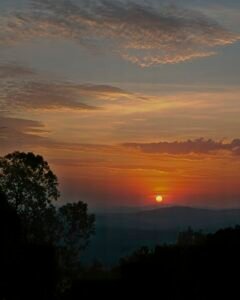
On the way to Lake Cyohoha, we stop at the church in Nyamata, another genocide memorial site. Women and children had taken shelter here while the men tried to protect them from outside. It didn’t work. People were killed inside in horrific ways. Victims’ clothing still lies across the pews, and caskets are filled to the brim with bones and skulls. It’s intense and heartbreaking I can’t keep the tears back. After leaving a donation, we quietly get back in the car and drive on to Lake Cyohoha, where we spend a few peaceful days.
The lake sits right near the Burundi border. We do our laundry in the river, bake speculaas cookies, read, and take in the view and the birds. It’s a wonderfully quiet change of pace after all the hustle of Kigali.
Back to Kigali for the Starlink
While we’re at Lake Cyohoha, we hear that a Starlink Mini has become available in Kigali. The next morning we drive back. Just before we leave, armed soldiers show up at the campsite for a routine check. Everything checks out, and we head off without any trouble.
In Kigali we meet Dennis, who Raimundo had been in touch with about the Starlink. He’s incredibly helpful he walks with us to the bank, helps us with the registration, and advises us on subscription plans. We grab lunch together, then head back to Fazenda, the campsite where we’d stayed before , for a few days of rest.
Unfortunately, we both start feeling unwell. After a negative malaria test and two rough, broken nights, we’re finally able to sleep properly again. Meanwhile, a metal frame gets built to mount the Starlink on the roof. We also try to pick up our laundry, but it’s not ready yet they’d forgotten about it. A day later we finally collect it and can head off toward the southwest.
Overlanding Rwanda: Nyungwe National Park and Lake Kivu
This stretch of our overlanding trip through Rwanda takes us along the transit road straight through Nyungwe National Park, a beautiful route through forest and hills at over 2,000 meters altitude.
The Transit Road Through Nyungwe National Park
The Nyungwe National Park transit road is easily driveable in a 4×4 and, at over 2,000 meters, brings a surprisingly cool climate. We climb up hills and back down again, enjoy the crisp weather (12°C above 2,000 meters), and sleep well. Along the way we spot monkeys and soak in the scenery. An officer along the road stops for a chat and gives us tips on safety near the DRC border everything’s fine.
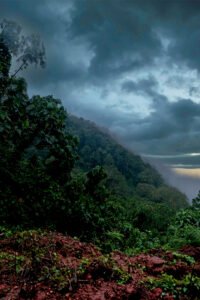
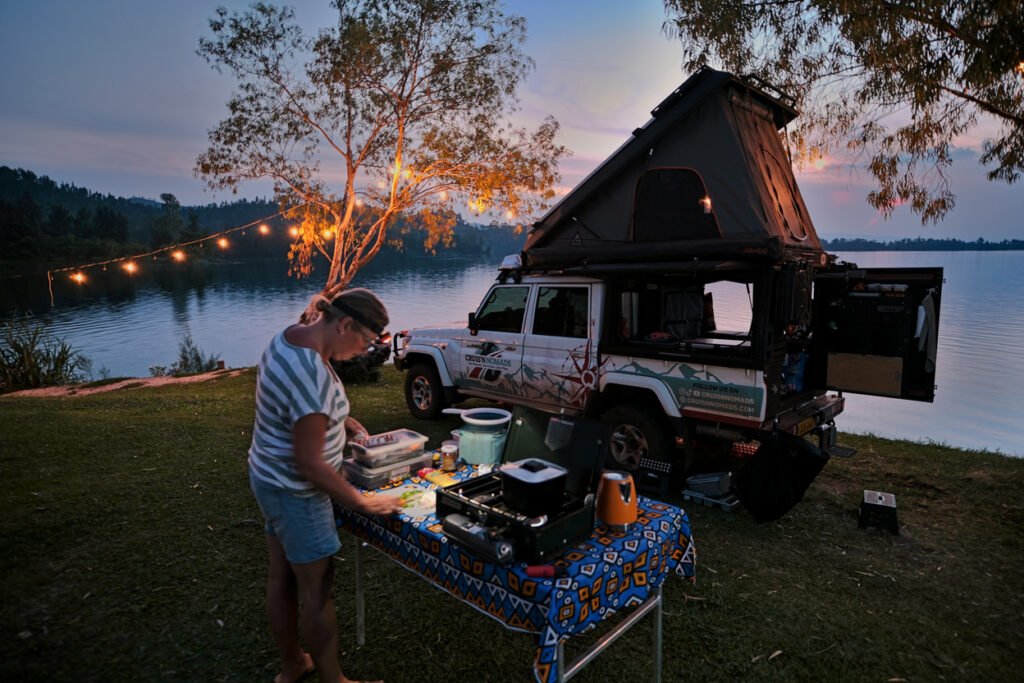
We drive on to Kibuye on Lake Kivu. At the campsite there we meet a German overlanding couple, Dores and Claus, and swap tips and stories. It turns into a great evening.
We take a boat across the lake to Napoleon Island, where a half-hour walk gets us to the top. Along the way we spot plenty of bats, and from the summit we get a stunning view over the lake and into Congo. On Monkey Island we feed bananas to vervet monkeys, and on Peace Island, Raimundo even takes a dip in the cold water 😄. Back at Donkey, we grab a quick lunch and take a motorbike taxi to the fruit and vegetable market. Later we get coffee at a spot recommended by Dores and Claus, and end up eating there too.
The next morning we’re woken at 5:50 a.m. by the singing of tilapia fishermen heading out onto the lake. What a beautiful way to start the day! After breakfast, we pack everything up and head off toward the Ugandan border.
Hiking at Lake Ruhondo
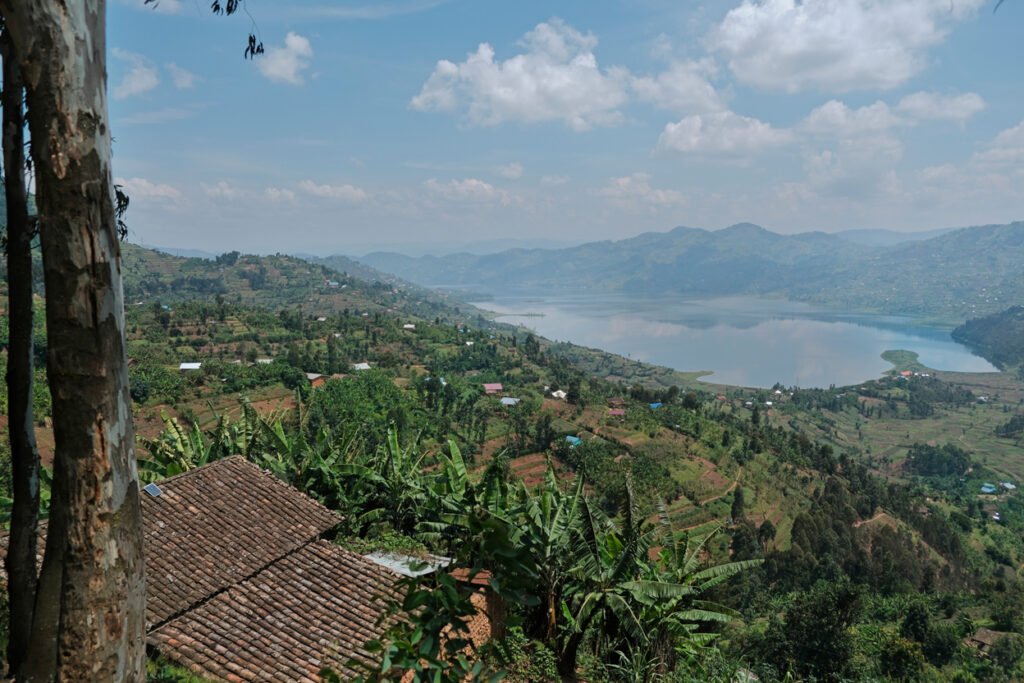
Our route to the border passes Lake Ruhondo. On the advice of hotel manager Patrice, we take a boat across the lake, walk through the village, and climb a hill from there. The hike is supposed to take about 2.5 hours, but we end up out for almost four. The view from the top is phenomenal two lakes nestled between green hills. We head back down the same way and take a leisurely boat ride back to the hotel. A sandwich, a cup of tea, a shower, and some downtime. Meanwhile a rain shower rolls in and the temperature drops sharply. For the first time in a long while, out come the long pants, a sweater, and a jacket.
On to the Ugandan Border
The next morning we set off for the Ugandan border. Along the way, we reflect on our journey through Rwanda a country that leaves an impression with its harrowing history, stunning green landscapes, and well-organized infrastructure. Rwanda makes you think, and it offers moments that stay with you. It’s a relatively small country, but it’s the people, the nature, and the stories that make this experience unforgettable. Here end our story of Overlanding Rwanda.
You can read exactly how that border crossing into Uganda goes and what awaits us there in the next article about our journey.