

Overlanding Uruguay: finally back home in Donkey
After breakfast in Buenos Aires, we pack our things and take an Uber to the harbour. We’re heading to Uruguay. First, an hour and a half on the Buquebus ferry, then another two and a half hours by bus to Montevideo.
At the terminal, we’re stamped out of Argentina and into Uruguay within five minutes. Right, that’s sorted. There’s even time for coffee before we board.
The bus journey gives us our first glimpse of Uruguay. Rolling pastures with cows and sheep. It reminds us a little of western France. Neither of us is particularly excited by it yet, but for now, we’re mainly here for something else.
Donkey is on his way.
He’s so close
Our apartment is in Montevideo’s old town, close to the shipping agent’s office. We walk over straight away. Between his limited English and our limited Spanish, we manage just fine. He copies Raimundo’s passport and the vehicle documents. All we still need to do ourselves is collect a form from the Ministry of Tourism.
The receptionist there knows exactly what we’ve come for. Hand over the passport, wait a little, check the details, pay and we’re done. Within half an hour, we’re back outside. We look at each other. That was easy.
We also meet up with the German couple sharing our container. It still feels a bit special. You say goodbye in Cape Town and meet up again on the other side of the world. They’re quite worried about collecting the vehicles. We trust that the agent knows what he’s doing. Until the container arrives, there isn’t much we can do anyway.
We track the ship through an app. When it passes Montevideo on its way to Buenos Aires, we walk down to the harbour. Maybe we’ll be able to see it. Unfortunately, it’s too far out at sea, but just knowing Donkey is so close feels good.
We fill our days with walks, coffee and searching for a multicooker. Meanwhile, Montevideo isn’t becoming our favourite city. Some of the old buildings have been beautifully restored, but many others look poorly maintained. We’re not really warming to it.
Luckily, there’s good company too. We meet up with Marco and Annemiek, who we originally planned to share a container with. Our schedules ended up not matching, but delays have since left their container sitting in a Brazilian port for almost four weeks. Now our vehicles are arriving at almost the same time after all. We have a lovely evening together, though we’d much rather their shipping had gone more smoothly.
On Sunday, our ship finally docks in Montevideo. We go down for another look. Donkey is here. Now we just need to get to him.
On Monday, we celebrate his arrival with coffee and cake. We’ve only been sitting there for fifteen minutes when the agent messages: be at the office tomorrow at one, we can collect the vehicle.
Woohoo! We’re like excited children. Neither of us gets much sleep that night.
Our home comes around the corner
On Tuesday, we arrive at the agent’s office on time. First, the paperwork. In other words, paying. Then we walk to the port with the group.
At a certain point, only the people named on the vehicle documents are allowed to go further. Raimundo goes ahead, while Miranda has to wait. He keeps her updated with messages and photos.
Four containers are opened. Ours is last. A vehicle in another container is proving difficult to get out, so everything takes longer than expected.
And then, at half past four, Donkey comes around the corner.
It’s so good to see him again. Here, on the other side of the world. Raimundo says he’s never been so happy to see a car.
After the final customs formalities, Donkey is free to go. Even so, we leave him at the port for one more night. The next morning, we walk back. At last, our backpacks can come home with us.
We drive to the apartment, load everything in and set off.
Our journey through South America can begin.
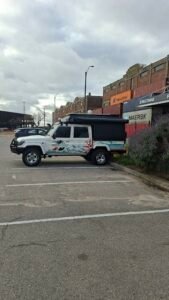
Hats on, heater on
Our first stop is UY Storage, a campsite just under an hour from Montevideo where many overlanders begin or end their journeys.
On the way, people wave and honk. We get thumbs up and smiles. What a lovely welcome. By the time we reach the campsite, we’ve gained some new Instagram followers too.
We spend the whole afternoon making Donkey our home again. Backpacks emptied, everything back in its place. It’s lovely to have our own things within reach again.
That evening, we sit around the campfire with other travellers. Meeting people feels different from what we’re used to in Africa. Everyone introduces themselves politely, but after that, there’s still a bit of distance. Perhaps it’s partly because almost everyone speaks German.
Among the enormous trucks, Donkey suddenly looks like a tiny little car. We have to laugh. Later, we chat with our Swiss neighbour about the different ways people travel. We’re happy with our own, smaller home.
Over the next few days, we potter around working on the vehicle. Touching up rust spots, installing the extra battery and trying out the multicooker. Marco and Annemiek arrive too, delighted that their vehicle is finally here after all the delays.
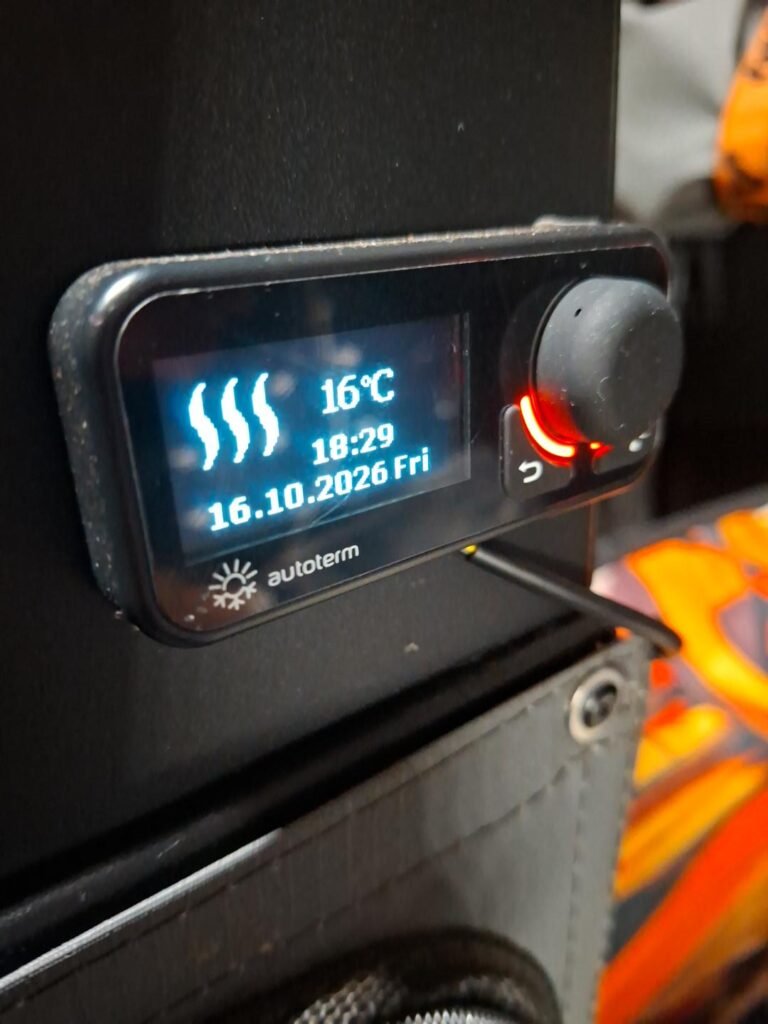
Meanwhile, we’re cold. Very cold. On the coldest day, it’s ten degrees during the day, with wind. Outside, we wear several layers, two jackets each and hats.
Luckily, we have a heater in Donkey. From around five o’clock, we retreat inside. It takes a little experimenting to find the right setting. By the end of the evening, we step outside to brush our teeth, our faces red from the heat.
Well, the heater definitely works.
Seeing a little of Uruguay after all
After five days, we head towards the east coast. We find some lovely wild camping spots and walk down to the sea. Those waves make quite a roar.
At a drinking water sign, we fill our water tank for free. Nobody comes over to have a look or a chat. In Africa, people would probably have gathered around Raimundo by now. We’re still getting used to how people here simply leave us to it.
We do really enjoy the wildlife. We see flamingos, all sorts of birds we don’t recognise and two capybaras beside the road. At one campsite, there’s even a skunk wandering around with a youngster.
Another campsite is on a recreation ground. We can’t find anyone, so we just park. Someone will turn up.
When we read the reviews more carefully, it turns out we can stay here for free, including using the toilets and showers. Now that’s a nice surprise.
Unfortunately, the weather continues to disappoint. We sit outside wrapped in layers during the day, then head into Donkey for warmth in the late afternoon. Eventually, we’ve had enough of the cold and decide to head towards Argentina.
Along the way, we enjoy a seven-kilometre walk with plenty of climbing and scrambling. Afterwards, we wonder whether such a muggy day was really the best choice for it. We also stop somewhere for coffee and a treat. The cake is so big we can skip lunch.
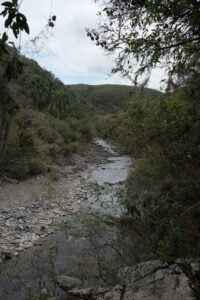
And then we drive to the border.
Uruguay hasn’t really won us over. We found the landscape of rolling pastures, cows and sheep a little monotonous. People were friendly, but we rarely got beyond that. Our limited Spanish probably didn’t help.
But Donkey is back, and we’re living in our own home again. We’re so happy about that.
Now, on to Argentina. The forecast promises warmer, drier weather. We’re ready.