

AluCab Canopy Camper review: nine months of experience
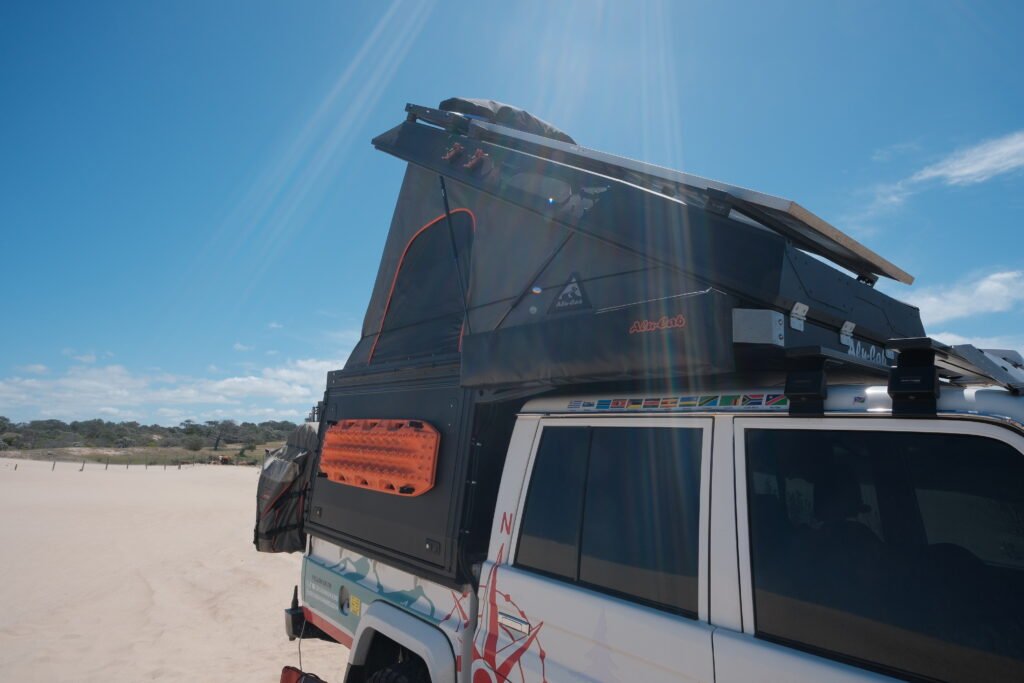
You get to know an Alucab Canopy Camper pretty well when you spend nine months travelling through Africa in it. We drove around 25,000 kilometres with our Alu-Cab Canopy Camper Deluxe, slept in it every night and used it as our kitchen, bedroom, wardrobe and living space. It kept us dry in the rain, let in hardly any dust on gravel roads and had our bed ready in less than thirty seconds.
As an everyday camper, it was fantastic. Yet after only about two and a half months, we discovered eight cracks in the structure. A product we’d had almost nothing but praise for suddenly became the start of a difficult warranty claim.
That leaves us with mixed feelings. The Alu-Cab Canopy Camper concept still suits the way we travel very well. But after our experience, we wouldn’t buy exactly the same version again.
| Feature | Our setup |
|---|---|
| Vehicle | Toyota Land Cruiser 79 Series, Donkey |
| Camper | Alu-Cab Canopy Camper Deluxe |
| Installed | November 2025 |
| Installer | R&D Offroad |
| Time used | Approximately nine months |
| Distance driven | Around 25,000 kilometres |
| Bed width | 1.35 metres |
| Cracks discovered | 20 January 2026 |
| Location of discovery | Northern Zambia |
| Number of cracks | Eight |
| Replacement | July 2026 |
| Sponsorship | None; we paid for everything ourselves |
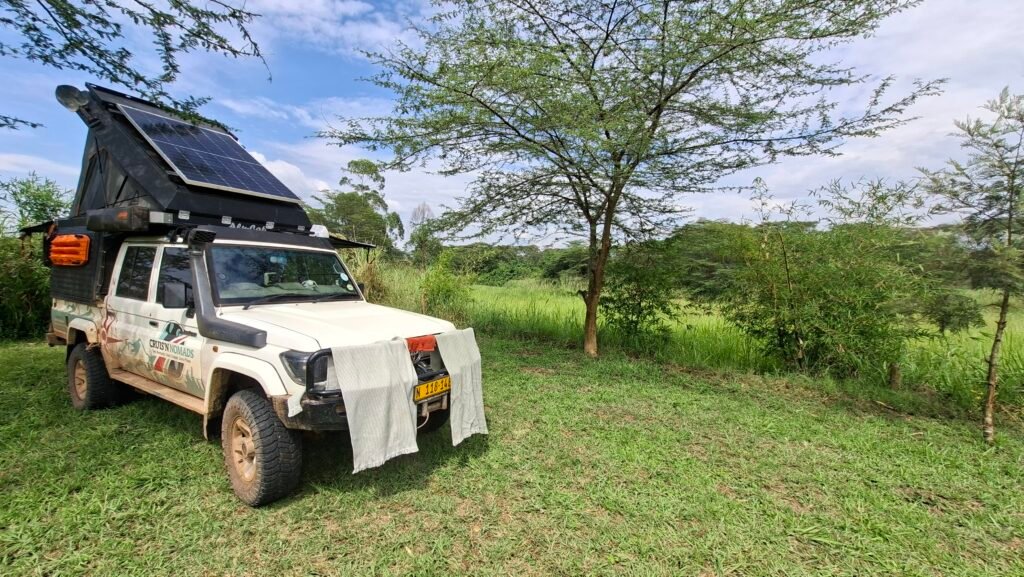
From a GEN 3-R to a complete Canopy Camper
When we bought Donkey in 2023, he already had a fold-out rooftop tent. It wasn’t the tent we would have chosen, so we replaced it with an Alu-Cab GEN 3-R. We were very happy with it. We liked the quality and how easy it was to use, so when the time came to convert Donkey, Alu-Cab was quickly back on our list.
For our next setup, we wanted more than somewhere to sleep on the roof. When you travel for months at a time, you inevitably get days of rain, cold or strong winds. On those days, we didn’t want to be stuck sitting under the awning or having to crawl straight into bed. We wanted a camper where we could also create a seating area downstairs.
We looked at several options. One was a canopy camper from Bushwakka. We thought it was a fantastic product. Everything folded out neatly, there was plenty of sleeping space and it could even be configured for more than two people. But we couldn’t create the sheltered seating area that mattered so much to us. That ruled it out for the way we travel.
A fully custom-built camper was another possibility, but the costs climbed so high that it was no longer a realistic option for us. In the end, the Alu-Cab Canopy Camper offered the best starting point: a brand we’d already had good experiences with, a camper we’d regularly seen other overlanders using and enough room for an interior we could design ourselves.
The seating area wasn’t a standard Alu-Cab feature, though. It was only possible because of the custom interior R&D Offroad built for us.
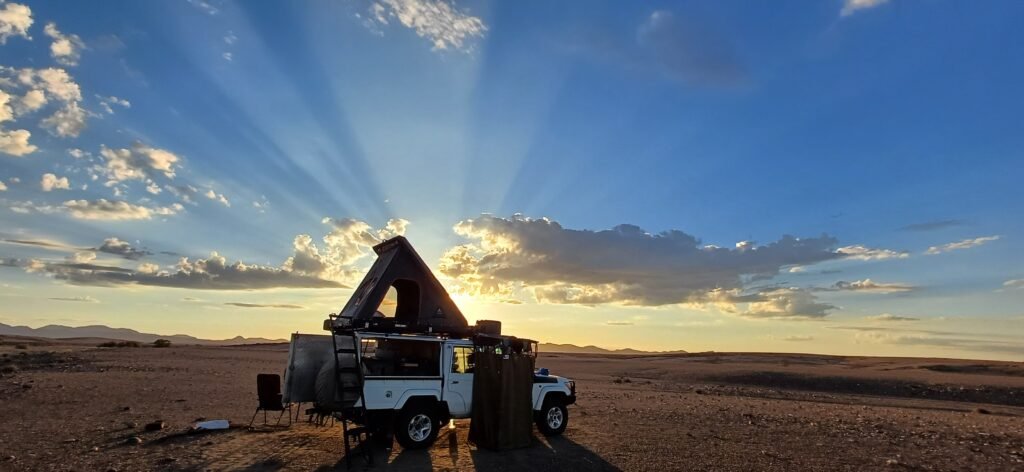
Our Alu-Cab Canopy Camper Deluxe
R&D Offroad installed the complete Canopy Camper Deluxe on Donkey in November 2025. The Deluxe package included a Shadow Awning, interior lighting, a USB socket, provision for solar panels and canvas storage bags with MOLLE panels on the rear door.
According to Alu-Cab, the tent fabric consists of two layers of 400 gsm UV-resistant ripstop canvas, and the sleeping area is insulated both above and below. The standard mattress is made from 70 mm high-density foam with a removable zipped cover. Alu-Cab Canopy Camper Deluxe
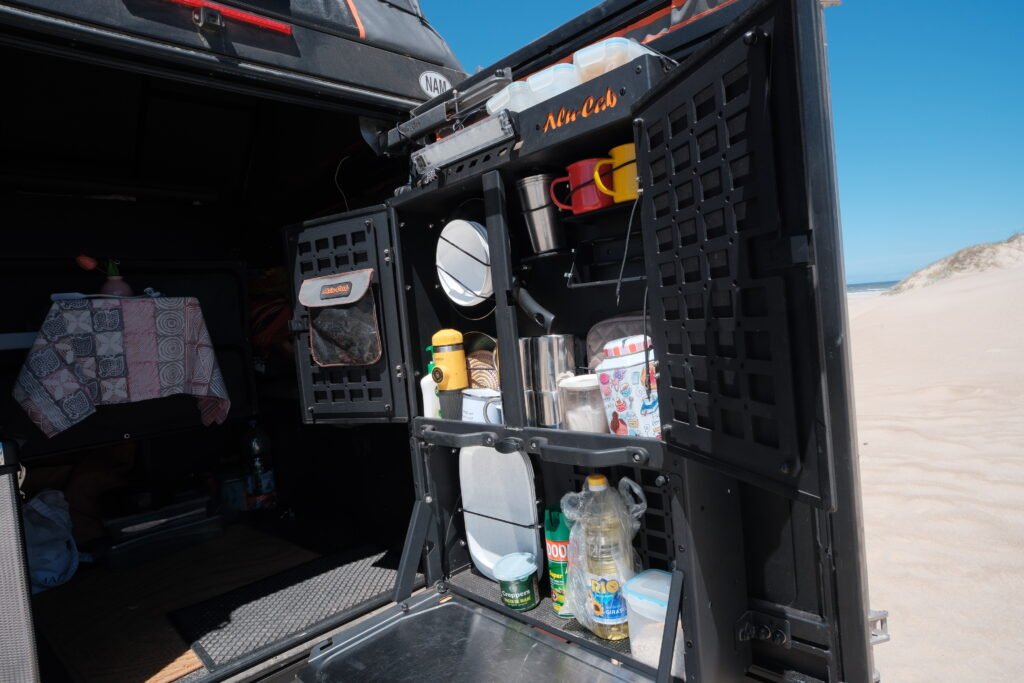
We added a Shower Cube, a rear-door kitchen, a spare wheel carrier, roof racks and an Alu-Cab backrest. That backrest might seem like a minor accessory on paper, but it turned out to be a very useful addition in everyday life.
R&D Offroad then designed and built the entire interior. They first made a 3D model, which we checked and approved. The interior was then built from folded aluminium panels, joined with rivets. There are no welded joints in the interior.
The most important part was the bench seat. We also had aluminium wardrobes built, along with dedicated spaces for our fridge and other belongings. Everything had a purpose. There were no awkward corners we couldn’t really use, and we didn’t have to keep moving boxes or bags to get to things.
It was this combination of the Canopy Camper, the backrest and the custom interior that made the setup work for long-term travel. Without the custom build, we would have had a good place to sleep, but not the living space we wanted.
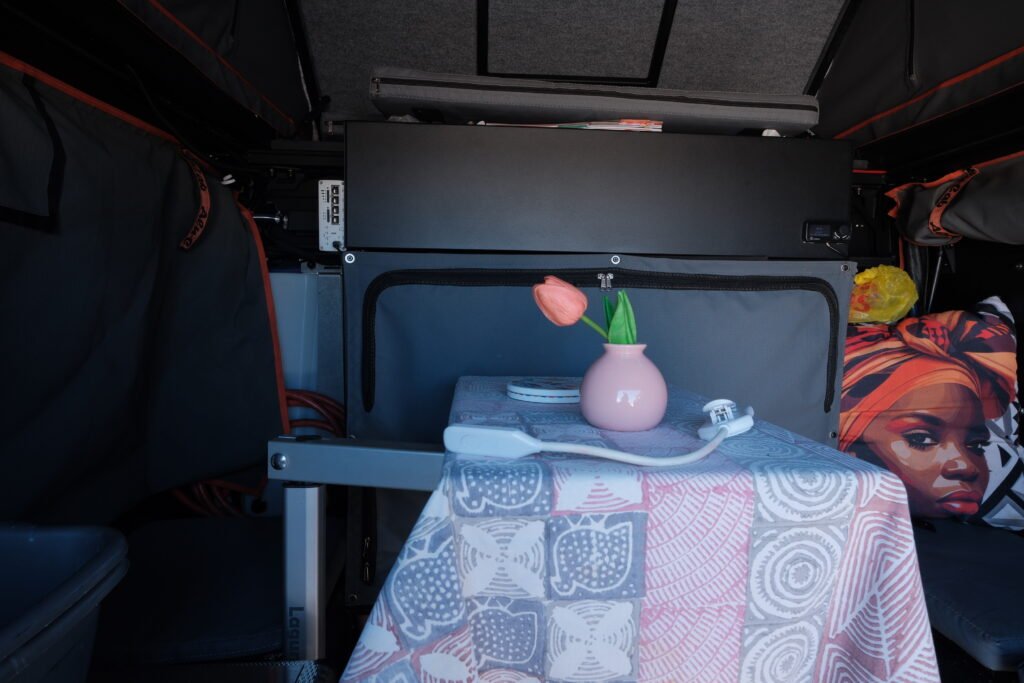
Nine months of sleeping and living in the camper
What stood out on the road was how easy the camper was to use every day. There are two latches at the back. Release them, push the roof up and the sleeping area is ready in about thirty seconds.
It does take quite a bit of strength, though. Miranda finds it difficult to push the roof all the way up, so in practice I always do it. The weight of our solar panels on the roof may play a part in that.
Closing it takes some effort too. You pull the roof down with a cord while making sure the canvas folds neatly inside.
We could leave the bedding in place. We didn’t even have to put our pillows away every morning. We sleep with our heads at the entrance end, so before setting off we moved the pillows to the foot of the bed, towards the cab. They did need to lie neatly side by side. If they didn’t, the roof was harder to close.
Opening took less than thirty seconds. We allowed about a minute for closing, because we needed to arrange the bedding and canvas properly. It’s a small difference, but doing it carefully saves you from having to force everything in each morning.
Sleeping and sitting in the sleeping area
We slept on the standard mattress for nine months and have few complaints. We had a breathable anti-mould layer fitted underneath it. That helps with moisture and also seems to make the mattress a little more comfortable.
It was only on cold nights that we noticed the mattress became quite hard. Otherwise, we slept well on it.
The bed is 1.35 metres wide. We’re both side sleepers, and it worked for us, but it isn’t spacious. If you both tend to sleep on your backs or are used to more room, 1.35 metres can feel pretty tight for two people.
One addition we really appreciated was the Alu-Cab backrest. It allowed us to raise part of the bed at an angle and sit upright in the sleeping area. According to Alu-Cab, the backrest has ten locking positions, so you can choose the angle that suits you. Alu-Cab Camper Backrest
That made the bed more than just somewhere to sleep. We could sit comfortably, read or watch something on the iPad. It effectively gave us two places to sit inside the camper: downstairs on the custom bench and upstairs in bed with the backrest raised. When we had to spend longer periods inside, that made the limited space much more useful.
Climbing into bed from downstairs was easy. Miranda stepped up using the bench on the right, while I used the fridge on the left. The furniture doubled as our steps. Without a bench or fridge in those positions, you’d need another way to get up.
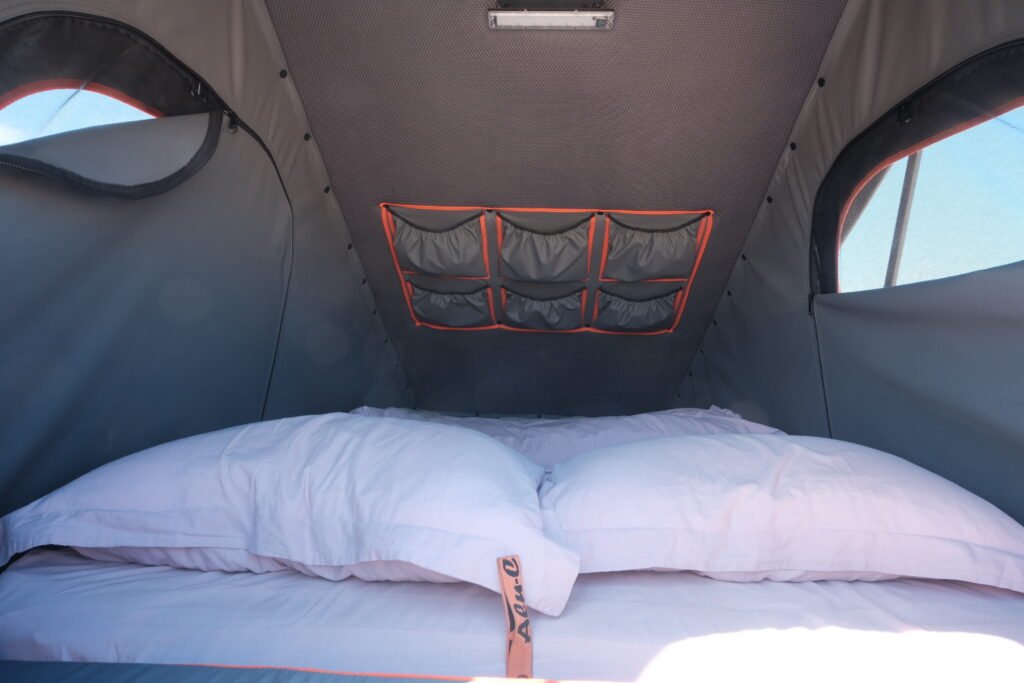
Sitting inside when outside isn’t an option
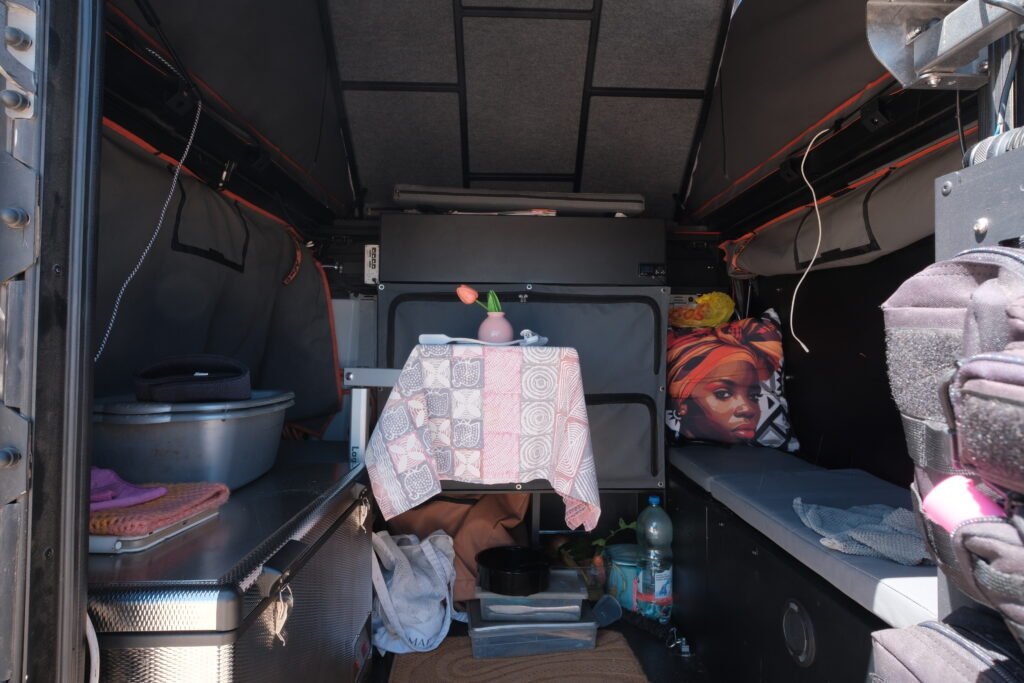
A downstairs seating area had been one of our main requirements, and it proved its worth on the road. In bad weather, we could comfortably sit there for four or five hours at a time. We’d set up the iPad, watch something and didn’t have to go straight to bed.
With the bed lowered, the space did feel cramped. Once we pushed the bed up against the roof, there was enough standing room to get changed and take things out of the cupboards. I’m almost 1.90 metres tall and can stand upright without any trouble.
The wardrobes turned out to be one of the best parts of the interior. Our clothes were easy to reach, and we didn’t have to unload the vehicle first. That convenience wasn’t part of the standard Canopy Camper. It came from our own layout and R&D Offroad’s custom build.
Sitting inside when outside isn’t an option
A downstairs seating area had been one of our main requirements, and it proved its worth on the road. In bad weather, we could comfortably sit there for four or five hours at a time. We’d set up the iPad, watch something and didn’t have to go straight to bed.
With the bed lowered, the space did feel cramped. Once we pushed the bed up against the roof, there was enough standing room to get changed and take things out of the cupboards. I’m almost 1.90 metres tall and can stand upright without any trouble.
The wardrobes turned out to be one of the best parts of the interior. Our clothes were easy to reach, and we didn’t have to unload the vehicle first. That convenience wasn’t part of the standard Canopy Camper. It came from our own layout and R&D Offroad’s custom build.
Dry in the rain and almost dust-free on gravel
The Canopy Camper stayed completely watertight during heavy rain. No water came in, and the canvas dried relatively quickly. We also rarely had to close the camper while it was thoroughly soaked.
It coped well with wind too. The canvas made relatively little noise, but we never slept in it during a proper storm. We therefore can’t give an honest assessment of how it handles extreme wind.
We used a heater in cold conditions, so we don’t know how warm the camper would stay without heating. The only clear drawback we noticed at low temperatures was the mattress becoming harder.
What surprised us most was how much dust stayed outside. Our previous canopy had a special ventilation hatch that created positive pressure while driving. If we forgot to open it, the canopy would be full of sand after a dusty road. In the Alu-Cab, almost nothing came in, even on gravel roads and off-road tracks.
We also had no trouble with rattling doors, latches working loose or other annoying noises while driving. Until January, the camper seemed to be doing exactly what we’d bought it for.
Eight cracks in northern Zambia
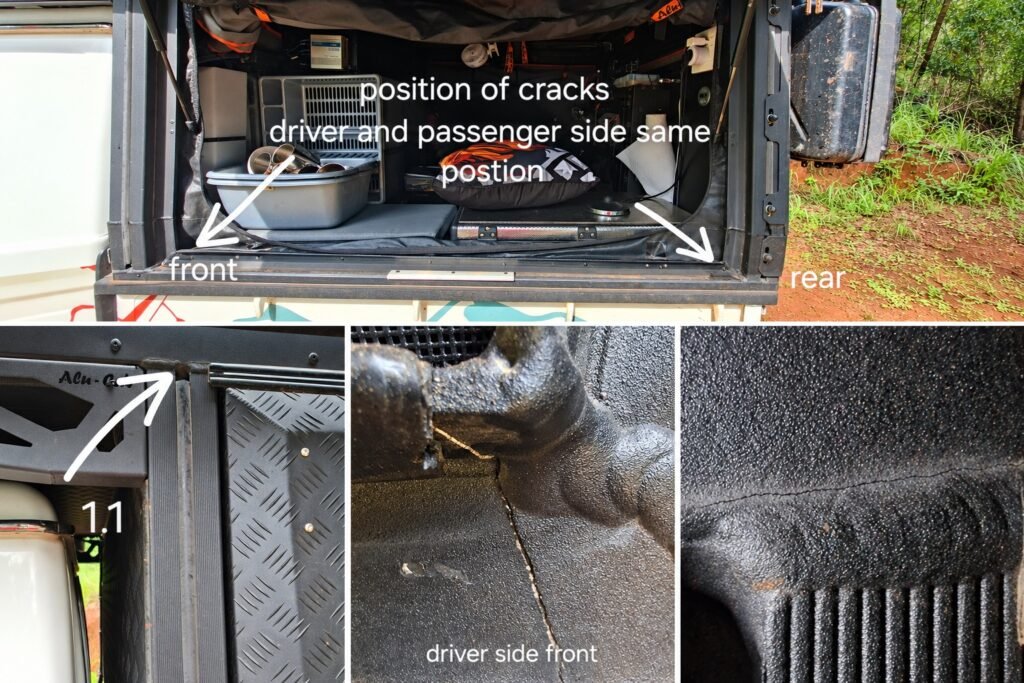
On 20 January 2026, our view of the Canopy Camper changed. We were in northern Zambia when we discovered eight cracks in the structure.
The cracks were in several places, including welds in the body and the side-door frames. Those in the door frames were particularly visible. They went through the material and grew as we continued using the camper.
You don’t expect damage like that in a new camper after about two and a half months of travel. Especially when you deliberately chose the product because of a previous positive experience with the same brand.
The cause of the cracks was never officially established, so we don’t want to draw any technical conclusions. We know what we saw and when the damage occurred, but not what caused it.
We were able to keep travelling with the damaged camper. The damage didn’t bring our trip to an immediate halt, but it did cause uncertainty and frustration. From that point on, you look at every rough gravel road and off-road section differently. Nobody had told us we couldn’t keep driving. We simply didn’t know how the cracks would develop.
Plenty of contact, but no solution
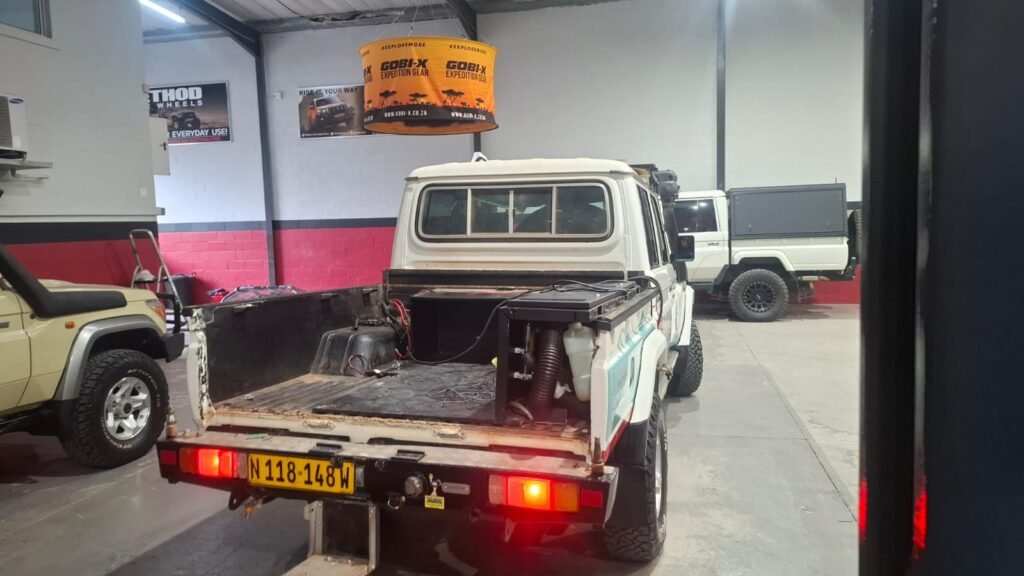
We reported the eight cracks to R&D Offroad. They had sold us the camper and installed the entire setup, so they were our point of contact.
The problem with the warranty process wasn’t a complete lack of communication. We were in contact with R&D Offroad, but that contact didn’t lead to a concrete solution.
Initially, we deliberately didn’t ask for a completely new camper. We understood that such a request could immediately turn into a major warranty dispute, so we suggested looking at a proper repair instead. There was then talk of reinforcement brackets being sent to Nairobi.
Two weeks before we reached Nairobi, we asked for an update on the brackets. That was when we found out they hadn’t been sent. The solution we’d been counting on while travelling fell through.
Despite a lot of communication and several promises, no plan emerged that would actually resolve the damage. In the end, we had to return to Cape Town. R&D Offroad wanted to inspect the camper themselves before deciding what to do with it. They wouldn’t commit to a repair in advance either.
At that point, we engaged a South African lawyer specialising in warranty cases, Trudie Broekman Attorneys. According to the legal advice we received, we were protected by South Africa’s Consumer Protection Act of 2008.
After our lawyer intervened, things changed quickly. Within 24 hours, communication picked up again, apologies were offered and we received a proposal for a modular replacement camper.
In July 2026, our entire Canopy Camper was replaced free of charge. R&D Offroad also paid for the modifications needed to accommodate the new camper. The only costs left for us were our legal fees.
We’ll cover the full correspondence and our experience with R&D Offroad in a separate review. This article focuses mainly on the product and how the damage affected our opinion of it.
A fantastic concept with a serious problem
We paid less than €15,000 for the Canopy Camper itself. After our experience, its value for money is difficult to sum up in a single sentence.
In everyday use, it was a very good product. It was quick to set up, kept us dry, kept a surprising amount of dust out and, with the custom interior, gave us exactly the living space we wanted. We lived and slept in it for nine months without ever getting tired of the concept.
When it comes to the build quality of our particular camper, though, we can’t give a positive verdict. A camper in this price range shouldn’t have eight structural cracks after about two and a half months. However well the rest of it works, a quick setup or a clever kitchen doesn’t make up for that.
We paid for the Canopy Camper and the entire interior ourselves. There was no discount, sponsorship or other commercial partnership.
Why we now choose the ModCAP Camper
Despite the cracks, the basic Canopy Camper concept still suits the way we travel. We want to set up quickly, sit inside, give all our belongings a fixed place and avoid dealing with a separate rooftop tent or a complicated setup every evening. The Alu-Cab Canopy Camper did all of that very well.
Still, we wouldn’t buy exactly the same version again. Our preference now is the ModCAP Camper fitted to Donkey in July 2026. The old Canopy Camper was largely a single integrated structure. The new ModCAP consists of separate sections that can be combined.
The ModCAP still has to prove itself as our journey continues. We can’t yet say that this construction is better in the long term. That would mean drawing another conclusion before we’ve driven enough kilometres.
Apart from the construction, we also think the new camper looks better. The door panels are completely smooth, without all the ribs of the previous Canopy Camper. That isn’t a decisive technical reason, but if we get to choose again, we might as well like the way it looks too.
Our verdict after nine months
The Alu-Cab Canopy Camper can be a very good starting point for long-term overlanding. It’s quick to set up, practical to use and performed very well in rain, wind and dust. Travellers who also want to spend time living inside will need a well-designed custom interior. That living space doesn’t come as standard.
The bed works for two people, but at 1.35 metres wide, it isn’t spacious. The adjustable backrest makes the sleeping area much more versatile, allowing you to sit comfortably upright as well as lie down. You should also bear in mind that opening and closing the roof can take quite a bit of strength, especially with extra weight such as solar panels on top.
Our camper developed eight cracks after only a short time. Its durability fell short of what we expected from the brand and from a camper in this price range. The cause was never officially established, and a solution only came after we brought in a lawyer.
Would we choose the concept again? Yes.
Would we buy exactly the same Alu-Cab Canopy Camper again? No. We’ve now chosen the ModCAP version, but that too needs to prove itself through long-term use.
Frequently asked questions
Is the Alu-Cab Canopy Camper suitable for long-term overlanding?
The basic setup is suitable. We lived and slept in it for nine months and drove around 25,000 kilometres with it. In our case, a custom interior was needed to create a comfortable seating and living area downstairs.
How quickly can you set up the Alu-Cab Canopy Camper?
The sleeping area is ready in about thirty seconds. We allowed around a minute for closing, because the bedding needed to be arranged properly and the canvas folded inside.
Can two people sleep comfortably in it?
We both slept well in it, but at 1.35 metres wide, the bed isn’t spacious. We’re both side sleepers. People who need more room may find it too narrow.
Can you sit upright in the sleeping area?
Yes. We had the adjustable Alu-Cab backrest fitted. This allowed us to raise part of the bed and sit comfortably in the sleeping area.
How did the camper handle rain and dust?
The camper stayed watertight even during heavy rain. Very little dust came in on gravel roads and off-road tracks.
What caused the eight cracks?
The cause was never officially established, so we don’t know what caused the cracks in the canopy.
2 thoughts on “AluCab canopy camper review”
Pingback: LandCruiser ombouwen: onze keuzes | Cruis’n Nomads
Pingback: R&D Offroad review Cape Town; Land Cruiser overland build;
Comments are closed.