logo[26]
Overlanding Zambia: through border control in 45 minutes, then the real adventure begins

Overlanding Zambia: trough border control in 45 minutes, then the real adventure begins

We had braced ourselves for a long day. Water ready, generous time buffer, mental preparation locked in. But the border with Zambia turned out to be one of the smoothest of the entire trip and that’s saying something when you’re crossing in a Land Cruiser, with all the paperwork, carnets, and insurance formalities that come with it.

The Border Crossing That Actually Went Well

On the Namibian side, we’re done in five minutes. A stamp, a smile, and we’re waved through.

On the Zambian side, we start by exchanging euros for Kwacha. At the health check desk we’re waved through without a single question apparently we look healthy enough. Immigration takes another five minutes. Then it’s on to customs for the vehicle.

This is the first time we use our Carnet the passage. Outside, the chassis numbers are checked, but the engine number gets skipped entirely. The officer laughs and tells us she can never find it. We pay road tax, then walk over to Interpol. The agent is called and shows up ten minutes later. There’s a bit of easy conversation, our police clearance gets stamped, and all our paperwork is handed back in good order.

Total time for the entire border crossing: under 45 minutes. We genuinely hadn’t expected that. We drive into Zambia with a big grin.

First Impressions: People Who Wave Without Wanting Anything

Almost immediately, we notice how different Zambia feels compared to Namibia and Botswana. Men and women are both working in the fields. The roads are noticeably clean. And everywhere, people wave at us adults and children alike, all equally enthusiastic, and not one of them asking for anything in return.

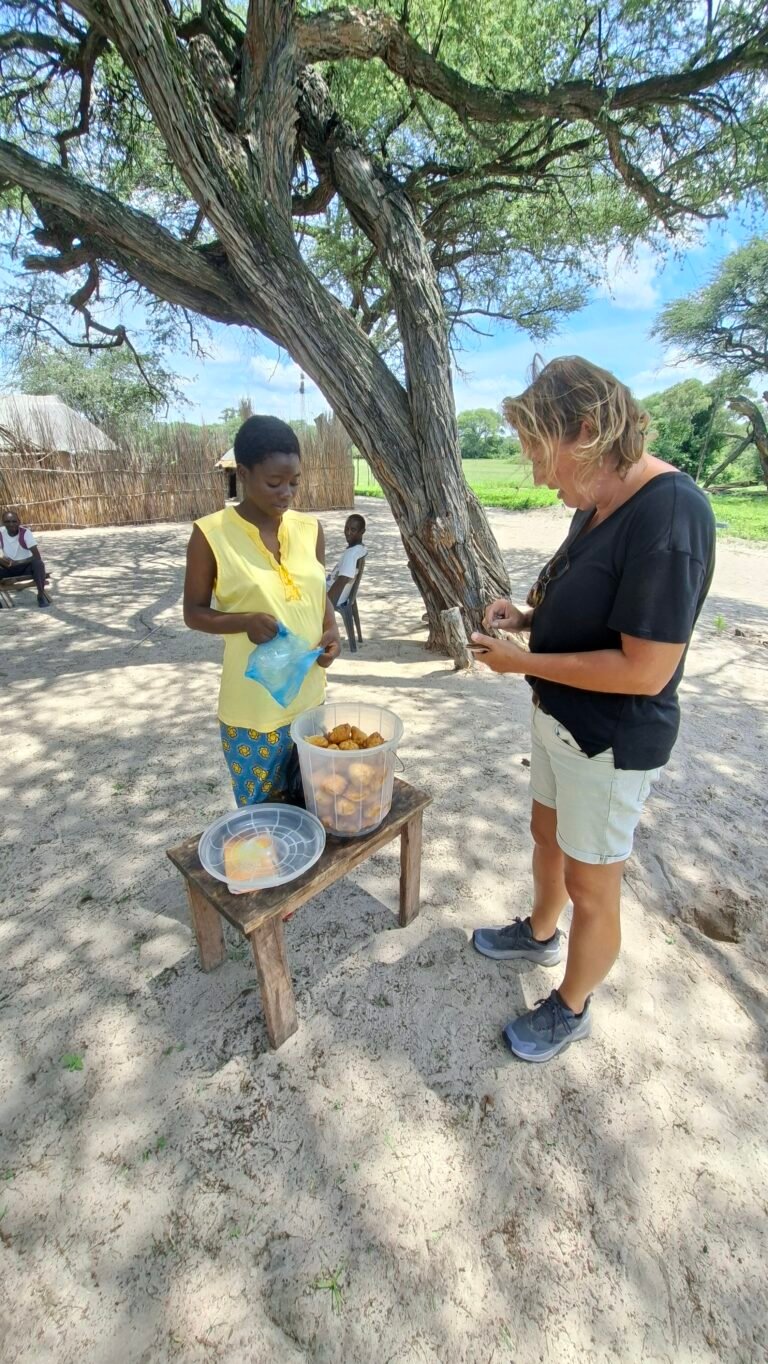
Along the way, we stop at a roadside stall selling vetkoek. Of course we have to try them in Zambia too. The only problem: we only have large notes and the seller has no change. Someone mentions there’s a small shop a little further down the road, so we lace up our walking shoes and head there together with her. A few minutes later, money sorted. The vetkoek tastes exactly like everywhere else.

Miranda koopt vetkoek

Nakawa Community Camp: Camping for a School

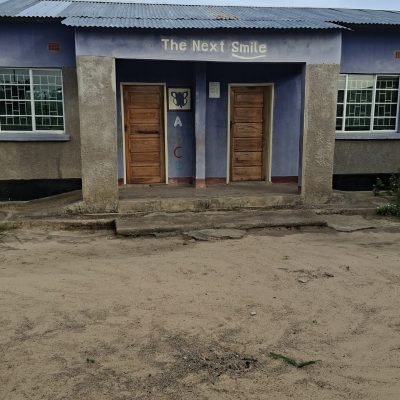
We spend the night at Nakawa Community Camp a campsite in the middle of a traditional Zambian village. All proceeds go directly to the primary school on the adjacent plot. The school was founded by the village chief and his wife and has 125 pupils. Some children live up to twenty kilometres away, but there’s now a bus that picks them up and brings them home.

One of the village women, Margaret, cooks traditional food for us. Those proceeds go to the school as well. We eat at a relaxed pace, play a round of Triominos, and turn in early.

School
School bij camping

Livingstone, COMESA, and a Barber Chair in a Container

In Livingstone we sort out our COMESA insurance https://comesayellowcard.com/. The insurance agent doesn’t have all the right documents on hand, but we can pick them up the next day in Lusaka. No problem. We buy SIM cards and withdraw cash. It’s striking how much here still runs on cash.

We drive on toward Lusaka and stop in Choma, where we’re allowed to camp at a lodge. In the evening we walk into town. Everywhere we go, people say hello and are happy to chat.

Raimundo heads off to get a haircut. A container by the side of the road, a big chair, and blunt scissors — but the result is perfectly fine. Before any cutting can happen, electricity has to be purchased first. After paying 60 Kwacha (€3), we walk back. We eat, wash up, and fall asleep to the sound of rain on the roof.

Lusaka: Wonderful Chaos and Our Official Participation in Corruption

Lusaka greets us with noise. Cars, motorbikes, pedestrians, all tangled together. What a wonderful chaos.

Then we get pulled over by the police. It turns out we drove straight through somewhere we shouldn’t have. According to the officer, we ignored a traffic sign. After some back and forth, we understand what went wrong.

We’re issued a fine, payable at the police station. But since we’re keen to keep moving, it can also be settled “on the spot.” The fine: 600 Kwacha (€23). We wait. Then the officer comes back and asks Miranda to come with her. She gets into a minibus with three men she doesn’t know. The fine is paid and a few hundred metres down the road she’s dropped off again — with best wishes for 2026.

Back at Donkey, as she opens the door, Miranda says:

“We’ve officially participated in corruption, but at least we can keep driving.”

COMESA: Second Attempt

At the insurance office in Lusaka, our Comesa is waiting but the licence plate and the countries listed are wrong. There are straightforward errors on the document. The agent in Livingstone hadn’t been paying close attention. After more than an hour of waiting, we finally have correct paperwork in hand.

We spend a few nights at Dylan’s farm on the outskirts of Lusaka and camp in his garden. In the evenings we sit around the fire listening to his stories. And we get to use his washing machine. An absolute luxury. Before we leave, at his request, we write a message on the wall of the toilet block.

Along the way we also apply for our Tanzanian visas. That takes just over an hour. Then we drive on north, along the border with the DRC. The atmosph

ere shifts noticeably. Children hit out at Donkey with sticks, and money is asked for often. At a police checkpoint we’re told these are refugees from the DRC. It explains a lot.

Lake Bangweulu: Nshima, a Motorbike Taxi, and a Waterfall That Wasn’t Worth It

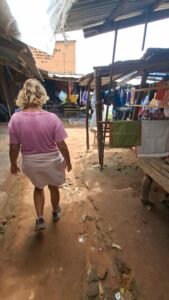
In Samfya, on Lake Bangweulu, the accommodation options are faded former glory but camping is fine. We walk to the local market, which turns out to be further than expected. We eat nshima with sausage. The local guys clearly find it entertaining to see two white people in the shop. Hardly anyone speaks English. This is one of Zambia’s poorer regions. Children usually only attend primary school and after that help out on the land.
Overlanding Zambia

Mbala: Tea, Coffee, and a Cheeseburger Without the Burger

We drive east, past a tea plantation. The muddy road is slick, but if you’re traveling through Zambia by Land Cruiser, you barely notice:  handles it without complaint. We buy tea, pick up groceries, eat lunch on the roadside under the watchful eyes of half the village, and stop by a beautiful stretch of water for a cup of tea.

Eventually we arrive at the Schaefer coffee plantation in Mbala. We’re allowed to camp in the garden, with a view over the valley. Lyn and Grant welcome us warmly  along with their five dogs. They moved from Cape Town to Zambia 27 years ago.

We stay a few days.

Coffee Tasting Was Non-Negotiable

According to Raimundo, the coffee is excellent. The beans were roasted the day before, and you could smell it. Naturally, coffee gets bought.

Our days pass quietly. A bit of maintenance on Donkey, baking bread, tidying up, calling friends, doing laundry, chopping vegetables. We also explore Mbala. Barely anyone stares — they’re clearly used to mzungus around here.

We visit the Moto Moto Museum, especially interesting for its section on the First World War and Zambian history. Best detail: no electricity. Do we have a light on our phones? Of course. So we walk through the museum using our phones as flashlights.

Along the road we spot signs for pizza and hamburgers. Miranda orders pizza, Raimundo a cheeseburger. The bun arrives  without the burger. The woman thought he only wanted cheese. Fifteen minutes later, the sandwich is complete.

Turns out a cheeseburger is a matter of interpretation.

In the meantime, good news: our visas for Tanzania have been approved. After six days we say goodbye to Grant, Lyn, and their dogs. The car is packed with coffee, fresh eggs, yoghurt, and mozzarella. They wouldn’t let us pay. “Part of farm life,” they said.

Lake Tanganyika: Drone Flights, Curious Kids, and No Swimming

We continue toward Lake Tanganyika, stopping along the way at Niamkolo Church — the oldest stone church in Zambia, built between 1895 and 1896. In 1908 the area was abandoned following an outbreak of sleeping sickness.

At the lake we stay at Tanganyika Science Lodge. We sit by the water, dip our feet in, and watch fishermen and people doing their laundry. We don’t swim bilharzia keeps us out of the water.

Two young boys watch curiously as we launch the drone. They think it’s exciting and a little unnerving. They wave at themselves on the screen and run off the moment the drone gets close. We take a photo and print it for them. As they walk away, they’re already telling each other, wide-eyed, about what they just saw.


After two wonderful days, it’s time to move on. With a calm mind, a full head, and exactly the kind of memories we’re out here chasing.


Next stop: the Tanzania border. End of Overlanding Zambia